
Blog/Comparison

Microcement vs Resin vs Polished Concrete: The Best Seamless Floor for a London Home

·9 min read·Atelier di Venice

Microcement, resin or polished concrete — which wins?

For most London homes, microcement is the seamless floor that actually fits the building. At just 2-3mm thick it goes over your existing tiles, concrete or screed, adds almost no weight, works on upper floors, and is compatible with underfloor heating. True polished concrete is the structural slab itself, so it is realistically a ground-floor or new-build choice. Resin is seamless and tough, but its glossy, synthetic look rarely suits a luxury interior. Microcement gives the seamless effect without the structural compromises.

What's the difference between microcement, resin and polished concrete?

All three give you a continuous, joint-free floor — but they get there in completely different ways, and that's where the practical differences begin.

  • Microcement is a polymer-modified cementitious coating applied by hand in thin layers, then sealed. At 2-3mm it is a surface finish, not a structural element, so it bonds to almost any sound substrate.
  • Polished concrete, in its true form, is the structural slab itself — poured concrete ground down and polished to expose the aggregate. A structural slab is typically 100mm or more of concrete, so it has to be designed into the building rather than added on top. (Thin concrete-effect 'microtoppings' do exist, but those are a separate coating product closer to microcement than to a polished slab.)
  • Resin (usually epoxy or polyurethane) is a poured liquid that cures to a hard, seamless film. It is common in commercial and industrial settings and increasingly in domestic kitchens, but the finish reads more synthetic than mineral.

At Atelier di Venice we specialise in microcement specifically because it delivers the seamless, mineral look people want from polished concrete, without rebuilding the floor. We have completed 150+ projects across London and the South East on exactly that basis.

Microcement vs polished concrete vs resin: full comparison table

Here is an honest, side-by-side look at how the three seamless floors compare on the factors that decide most London projects.

FactorMicrocementPolished concreteResin (epoxy/PU)
LookSoft, mineral, matte-to-satin; subtle cloudy movementIndustrial, stone-like; exposed aggregateGlossy, uniform, more synthetic
Thickness2-3mm100mm+ (structural slab)2-5mm typical
Added weightNegligibleVery high (full slab)Low
Suits upper floorsYesRarely (slab weight and build-up)Yes
Underfloor heatingCompatibleCompatible (in-slab)Compatible
DurabilityHigh; reseal high-traffic and wet areas every 2-3 yearsVery highHigh; can chip and show scratches
Water resistanceExcellent once sealed (used in wet rooms)Good; needs sealingExcellent
Renovation-friendlyExcellent — goes over tiles/screedPoor — usually needs a new slabGood, but needs a flat, sound base
UV / colour stabilityStableStableAromatic epoxy can yellow in sunlight; PU is more UV-stable
RepairabilityLocalised areas can be patched and re-blendedDifficultDifficult to patch invisibly
Indicative costFrom £185/m² fully installedVaries widely; high once slab works are includedMid-range; cheaper than full slab works

Note that a perfectly invisible localised repair in any seamless floor is difficult; microcement is the most forgiving because its hand-applied, mineral finish can be feathered and re-blended over an area.

Can you put polished concrete on an upper floor in a London flat?

In most cases, no — and this is one of the biggest reasons London buyers choose microcement instead. True polished concrete is the structural slab itself, so it has to be poured as part of the building. A typical slab is 100mm or more of concrete, adding significant dead load that suspended timber or upper-floor structures usually are not designed to carry. In a period conversion, a mansion-block flat, or anything above ground level, retrofitting a concrete slab is rarely practical or cost-effective without structural works.

Microcement sidesteps the problem entirely. At 2-3mm it adds negligible weight and bonds to your existing screed, concrete or tiles. That is why it is the go-to for first-floor living rooms, upstairs bathrooms and apartment renovations across boroughs like Kensington, Chelsea, Mayfair, Belgravia, Notting Hill and Marylebone, where the building fabric is fixed and the floor build-up has to stay shallow. You get the seamless, polished-concrete aesthetic without re-engineering the floor.

Which seamless floor works with underfloor heating?

All three can be used over underfloor heating, but microcement has a real advantage for retrofits. Because it is only 2-3mm thick, it transfers heat efficiently and warms up quickly — there is very little mass for the heat to push through. Thick concrete slabs hold and release heat more slowly, which can be a feature in new builds but is less responsive day to day.

The thinness also matters for the renovation itself. Laying microcement over an existing heated screed does not add height that throws out door clearances, skirting lines or the transition to adjoining rooms. As part of our reinforced 5-step system we carry out a technical assessment of the heating layout and substrate first, then build in joint sealing and fibre mesh reinforcement so the finish moves with the floor as it heats and cools. This significantly reduces the risk of the hairline cracking people sometimes fear with hard finishes over underfloor heating.

Why does microcement suit London renovations better than concrete or resin?

Because a London renovation is rarely a blank slate — you are working over existing floors, in occupied or part-occupied homes, with fixed structures and tight access. Microcement is built for exactly that situation.

  • It goes over what is already there. Existing tiles, concrete and screed can usually stay, avoiding demolition, skip hire and weeks of disruption.
  • It keeps floor levels almost unchanged. At 2-3mm there is no awkward step up between rooms and no doors to re-hang.
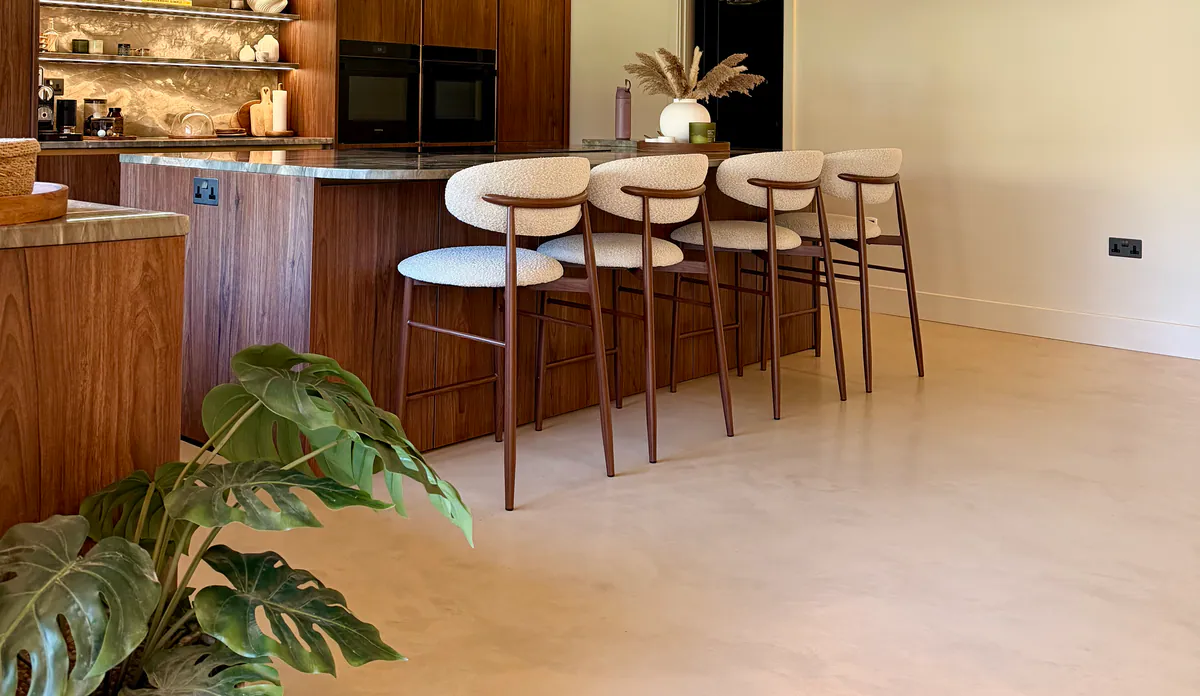
  • It flows seamlessly. One continuous surface runs from kitchen through to living space with no thresholds — the open-plan look London buyers want.
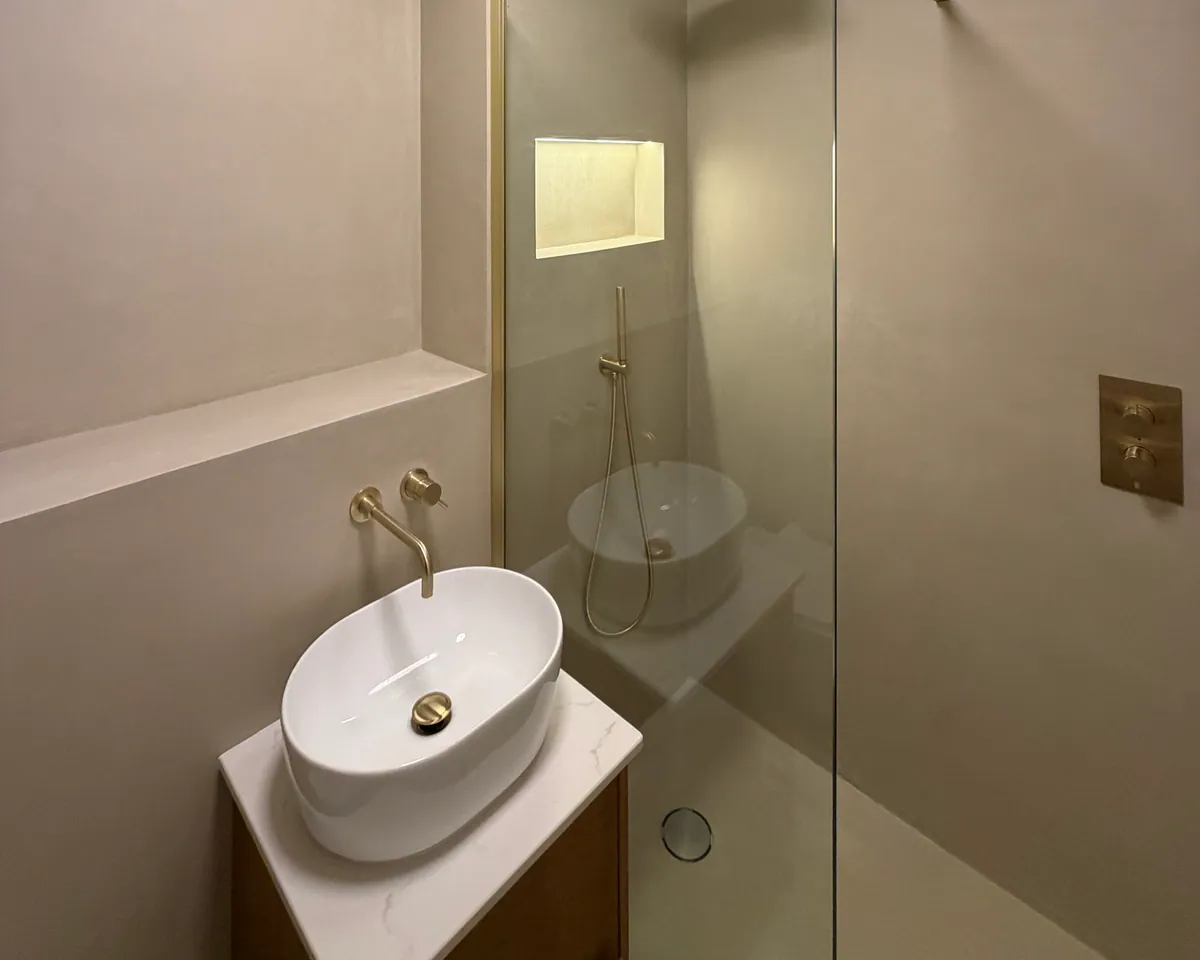
  • It is genuinely water-resistant once sealed. Around 40% of our microcement work is bathrooms and wet rooms, so the same floor can carry from a hallway into an en-suite.
  • It is repairable. Localised areas can be patched and re-blended, which is far harder with resin or polished concrete.

Polished concrete is superb in the right setting — a ground-floor extension or new build designed around it. Resin earns its place in workshops, garages and some utility spaces. But for a luxury London home being renovated rather than rebuilt, microcement is the finish that respects the building you already have.

How much does a seamless floor cost in London?

Microcement at Atelier di Venice starts from £185 per m², fully installed. That price includes our complete 5-step system, all materials, and a 2-year written warranty — there are no hidden extras. Polished concrete and resin are harder to pin to a single rate: resin sits in the mid-range for the finish alone but needs a flat, sound base, while polished concrete can look economical per square metre until you add the slab works, at which point it becomes a major structural cost.

For microcement, here are indicative installed ranges for typical London rooms in 2026. Every project is quoted after a free site assessment.

SpaceTypical sizeIndicative cost
Wet room / shower4-8m²£1,800 – £3,500
Bathroom8-15m²£2,000 – £4,500
Kitchen floor15-25m²£3,000 – £5,500
Open-plan living30-50m²£5,500 – £10,000
Full apartment60-100m²£11,000 – £20,000

As a rough guide to the £185/m² rate, the larger share typically goes to skilled hand-application and multi-stage sealing, with materials a smaller proportion. This split is approximate and varies by substrate, access and finish. Larger areas tend to carry a lower per-m² cost; complex bathrooms with niches and fixtures carry more.

The verdict: which seamless floor should you choose?

Choose your floor by what the building allows and the look you are after:

  • Choose microcement if you are renovating, working on an upper floor, want underfloor heating to stay responsive, need a continuous floor that can also run into a bathroom, and prefer a soft mineral finish over a glossy or industrial one. For the overwhelming majority of London homes, this is the answer.
  • Choose polished concrete if you are building new or extending at ground level and want the raw, aggregate-exposed industrial look designed into the slab from day one.
  • Choose resin if you are finishing a garage, workshop or utility space where a hard, high-gloss floor is acceptable and even desirable.

If you are weighing these up for a home in Kensington, Chelsea, Mayfair, Belgravia, Knightsbridge, Notting Hill, Fulham, Battersea, Islington or Hackney, we are happy to give you a straight answer about which finish your specific floor can take. Book a free site assessment — call 07541 244064 or email contact@atelierdivenice.co.uk — and we will assess the substrate, structure and heating before recommending anything.

Frequently Asked Questions

Is microcement the same as polished concrete?

No. Polished concrete is the structural slab itself, ground and polished, typically 100mm or more thick. Microcement is a thin 2-3mm coating applied over an existing floor to give a similar seamless, mineral look without a concrete slab. That is why microcement works on upper floors and over existing tiles or screed, where true polished concrete usually cannot.

Is microcement better than resin flooring?

For a home interior, usually yes. Resin is durable and seamless, but the finish looks glossy and synthetic, and aromatic epoxy can yellow in sunlight. Microcement gives a softer, mineral finish that suits luxury interiors, is repairable in localised areas, and is water-resistant once sealed — we use it in wet rooms. Resin still makes sense for garages, workshops and utility spaces.

Can I have a seamless concrete look on a first-floor flat?

Yes — with microcement, not a poured concrete slab. A structural concrete slab adds too much weight for most upper floors and period conversions. Microcement is only 2-3mm thick, adds negligible weight, and bonds to your existing screed or tiles, so you get the seamless concrete aesthetic on any floor of a London flat.

Does microcement crack like concrete?

Properly installed, it should not. Concrete slabs can develop shrinkage and structural cracks. Microcement is reinforced as part of our 5-step system — we seal movement joints and embed fibre mesh across the surface so the finish flexes with the substrate rather than against it. This matters most over underfloor heating, where the floor expands and contracts.

How much does microcement flooring cost compared to polished concrete in London?

Microcement starts from £185/m² fully installed, including all materials and a 2-year written warranty. Polished concrete can look cheaper per square metre but becomes expensive once you include the structural slab works, which microcement avoids entirely. For renovations, microcement is almost always the more cost-effective route to a seamless floor.

Can the same seamless floor run from my living room into a bathroom?

Yes — this is a key advantage of microcement and a reason it suits open-plan London homes. Because it is water-resistant once sealed, the same finish can flow from a hallway or living room straight into a bathroom or wet room with no threshold. Around 40% of our microcement work is bathrooms and wet rooms.

Ready to Get Started?

Contact us for a free site assessment. We respond within 24 hours.

Get a Free Quote