Microcement or Venetian Plaster? The Short Answer
Choose microcement for floors, bathrooms and wet rooms — a cement-based, seamless surface that is water-resistant and effectively waterproof once correctly sealed, from £185/m². Choose Venetian plaster for feature walls and ceilings, where you want hand-burnished depth and the way light moves across lime. The simple rule: microcement goes where there is water or footfall; Venetian plaster goes where a wall should become the moment in the room.
At Atelier di Venice we apply both across London and the South East, and below is an honest, side-by-side comparison.
What is the difference between microcement and Venetian plaster?
The two are often confused because both are seamless, hand-applied and free of joints or grout lines. The real difference is what they are made from and what they are made for.
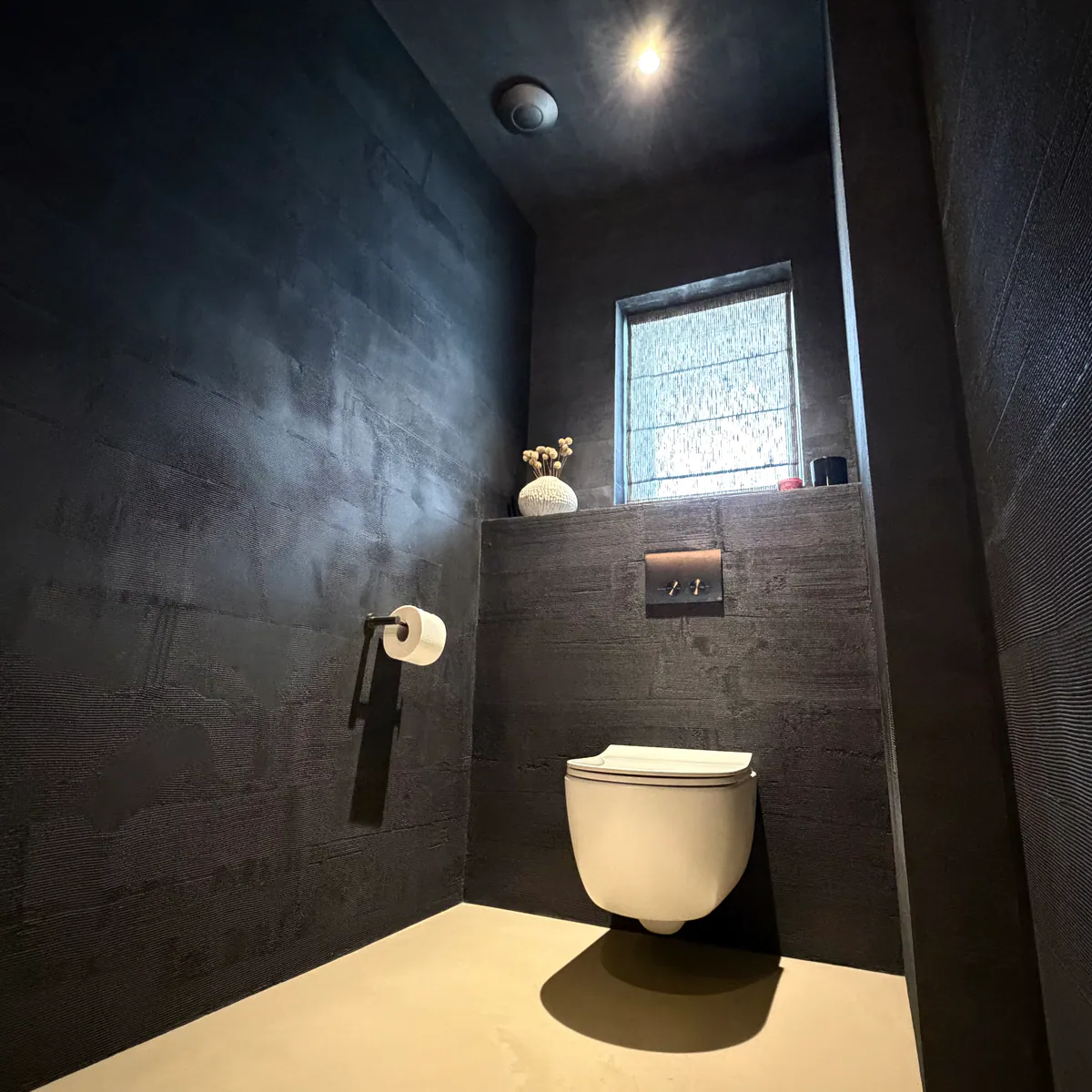
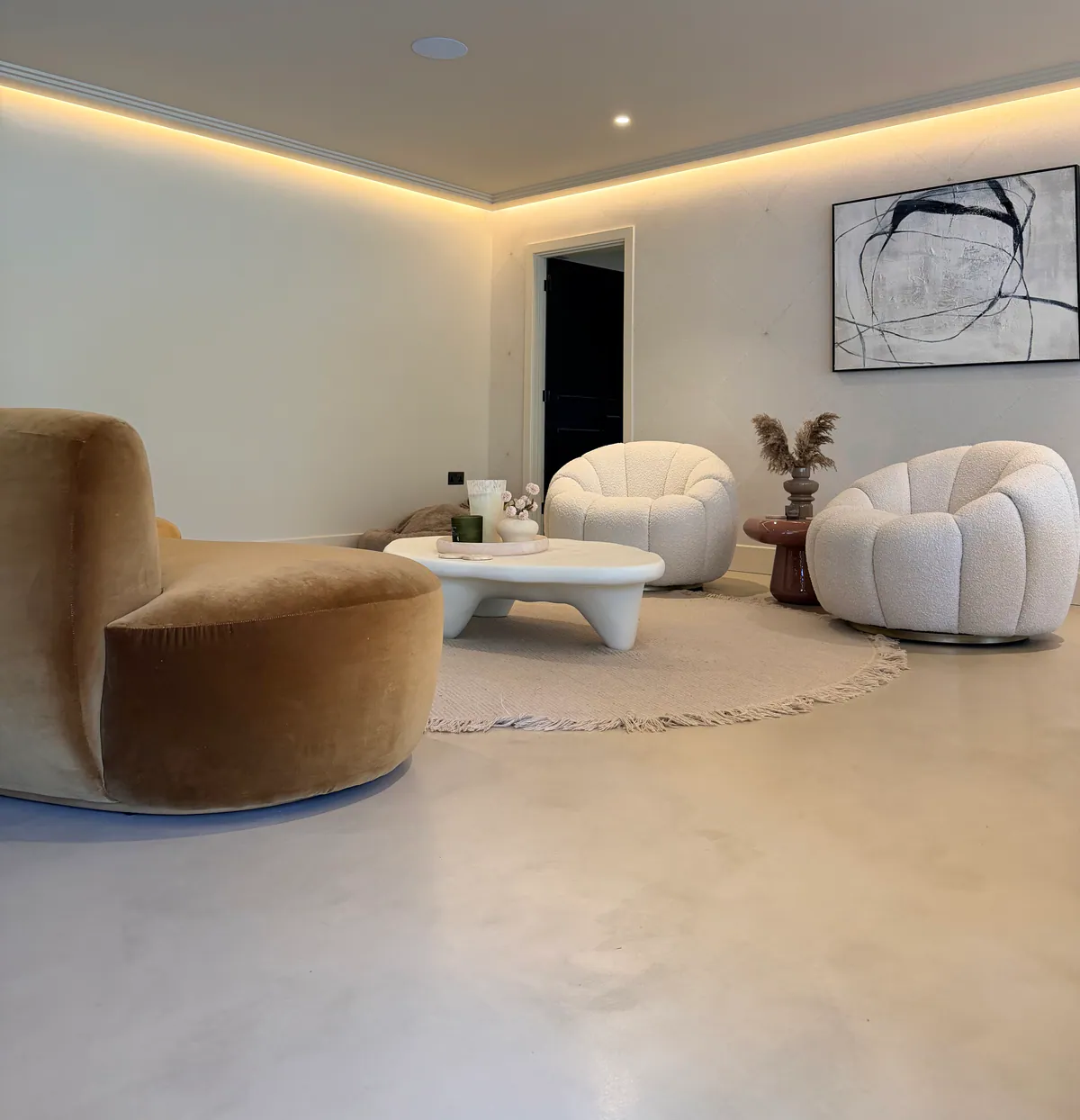
Microcement is a polymer-modified, cement-based coating applied at just 2-3mm thick. It bonds over existing tiles, concrete or screed, works with underfloor heating, and once sealed it is water-resistant and effectively waterproof — which is why it suits floors, kitchens, bathrooms and wet rooms.
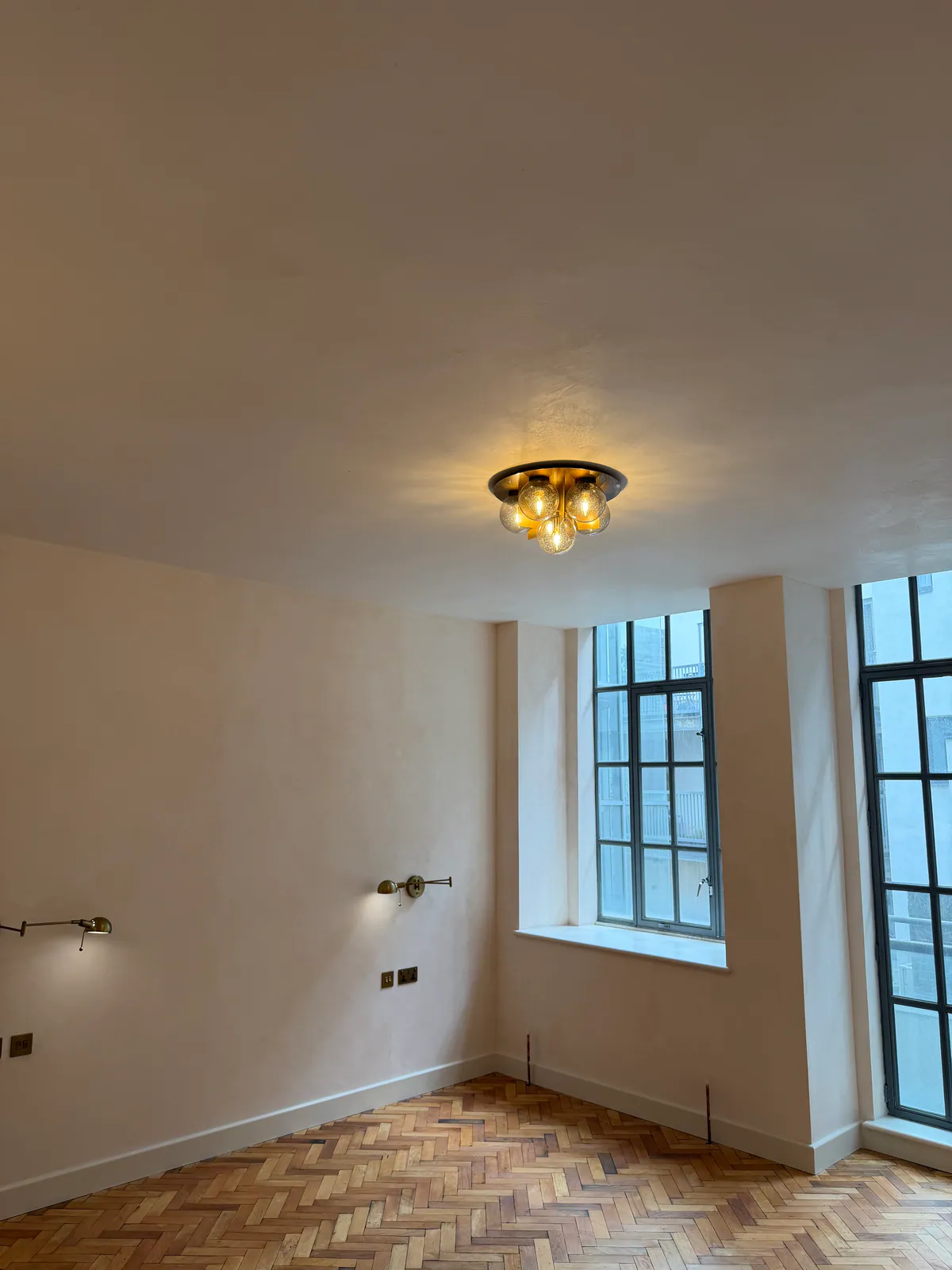
Venetian plaster is a lime-based wall finish rooted in Italian craftsmanship. Multiple thin coats are trowelled and burnished by hand, then the surface hardens over time through carbonation. It is breathable, naturally resistant to mould thanks to lime's high alkalinity, and unmatched for depth and luminosity on walls and ceilings — but it is not built for floors or direct water exposure.
Put plainly: the same seamless beauty, different engineering. Microcement is a performance surface; Venetian plaster is a decorative one.
Microcement vs Venetian plaster: side-by-side comparison
Here is how the two finishes compare on the points that actually decide a London project. Costs are indicative and always confirmed after a free site assessment.
| Factor | Microcement | Venetian Plaster |
|---|---|---|
| Base material | Polymer-modified cement | Slaked lime (natural) |
| Where used | Floors, walls, showers, wet rooms, kitchens, stairs | Walls and ceilings |
| Water resistance | Water-resistant; effectively waterproof once sealed and maintained | Water-repellent on walls; not for direct spray or floors |
| Durability | High — built for foot traffic, impact and wear | Hardens over time; very long-lived on protected walls |
| Typical location | Bathroom floors, open-plan living, wet rooms | Reception walls, dining rooms, vaulted ceilings |
| Finish look | Matte to satin, mineral, contemporary, seamless | Polished, marbled, metallic — depth that shifts with light |
| Indicative cost | From £185/m² (5-step install, all materials, 2-year written warranty) | Quoted per project by wall area and finish type |
If a single number matters to you: microcement carries a transparent, all-in starting price of £185/m². Venetian plaster is quoted per project because the labour varies considerably between a smooth Marmorino and a high-polish Stucco Lustro.
What is microcement?
Microcement is a polymer-modified, cement-based coating applied in thin layers to create a seamless, joint-free surface. It suits floors, walls, bathrooms, wet rooms, kitchens and staircases.
- Cement-based — hard-wearing, and water-resistant and effectively waterproof once correctly sealed
- Applied over existing tiles, concrete and screed, usually without removal
- Only 2-3mm thick — ideal for renovations where floor height matters
- Compatible with underfloor heating
- Available in a wide range of colours and matte-to-satin finishes
Every microcement installation we carry out uses our reinforced 5-step system: technical assessment; surface protection; reinforcement and structural control (joint sealing plus fibre mesh); controlled, layered application; and final sealing with a quality inspection. It is the reinforcement stage that helps the same finish flow from a bathroom floor up a shower wall while controlling the risk of cracking. You can see the full process on our microcement page.
What is Venetian plaster?
Venetian plaster is a hand-applied, lime-based wall finish with roots in Italian craftsmanship. Multiple thin layers are burnished by hand to create depth, movement and a luminous quality that paint and wallpaper cannot replicate.
- Lime-based — natural, breathable and naturally resistant to mould
- Applied primarily to walls and ceilings
- Multiple finishes: Marmorino, Stucco Lustro, polished, metallic, textured
- Hardens over time through carbonation, becoming more durable as it cures
- Not suitable for floors or areas of direct water exposure
Where microcement is engineered for performance, Venetian plaster is chosen for atmosphere. It is what turns a hallway, a dining wall or a vaulted ceiling into the feature of a home. Explore finishes on our Venetian plaster page.
When should you choose microcement?
Choose microcement when the surface has to perform as well as look beautiful. It is the right answer when you need:
- Floor surfaces — it is designed for foot traffic and impact
- Wet areas — bathrooms, showers and wet rooms, where it is water-resistant and effectively waterproof once sealed
- Seamless room flow — open-plan living with no thresholds or grout lines
- Renovation over existing surfaces — applied over sound tiles, often avoiding demolition and skip costs
- Underfloor heating — at 2-3mm it transmits heat efficiently
Around 40% of our microcement work is bathrooms and wet rooms — one of our core specialities across London and the South East. We reseal high-traffic and wet areas every 2-3 years to keep the surface performing. For the detail on waterproofing and sealing, see our guide to microcement bathrooms and wet rooms.
When should you choose Venetian plaster?
Choose Venetian plaster when you want a wall or ceiling to carry the character of the room. It is the right answer when you want:
- Statement walls — feature walls, reception areas and dining rooms
- Light interaction — surfaces whose colour and sheen shift through the day
- Heritage character — sympathetic to period properties across Kensington, Chelsea, Belgravia and Notting Hill
- Decorative ceilings — vaulted ceilings, archways and cornicing
- Natural breathability — lime helps regulate humidity in older homes
Because lime breathes, Venetian plaster is often the more sympathetic choice in London's stucco-fronted and listed properties, where trapping moisture behind a fully sealed finish would be a mistake.
Can you use microcement and Venetian plaster together?
Yes — and some of our most successful projects do exactly that. The classic pairing is a seamless microcement floor with a Venetian plaster feature wall: the floor gives a calm, contemporary foundation, while the plaster adds warmth, texture and depth at eye level.
In a recent Chelsea home, for example, we ran a poured-look microcement floor through an open-plan kitchen and living space, then brought a polished Venetian plaster up a single chimney breast. The two finishes share the same mineral honesty, so they read as one considered material palette rather than two competing ideas. We have applied this approach across more than 150 projects in London and the South East.
We will advise on the right combination for your space — including which finish belongs where — during a free site assessment. Call us on 07541 244064 or email contact@atelierdivenice.co.uk, or use our contact page.
Frequently Asked Questions
Is microcement more expensive than Venetian plaster?
They usually sit in a similar bracket, but they are priced differently. Microcement has a transparent starting price of £185/m², which includes our 5-step installation, all materials and a 2-year written warranty. Venetian plaster is quoted per project because labour varies between a smooth Marmorino and a high-polish finish. We give an accurate, project-specific figure after a free site assessment.
Can Venetian plaster be used in bathrooms?
On walls away from direct water spray, yes — with the correct lime-suitable sealing, Venetian plaster works in a bathroom and its breathability is an advantage. For shower zones, wet rooms and any floor, we recommend microcement instead, as it is water-resistant and effectively waterproof once sealed and built for regular water exposure.
Which lasts longer, microcement or Venetian plaster?
Both can last for many years when correctly applied. A well-installed microcement surface typically lasts around 15-20 years or more when it is resealed on schedule — we reseal high-traffic and wet areas every 2-3 years. Venetian plaster hardens over time through carbonation, becoming more durable as it cures on protected walls and ceilings.
Can I have microcement floors and Venetian plaster walls in the same room?
Yes — it is one of the most popular combinations we install. A seamless microcement floor gives a contemporary base while a Venetian plaster feature wall adds depth and warmth. Both are mineral finishes, so they complement each other naturally. We plan the layout so each finish sits where it performs best.
What is the main difference between microcement and Venetian plaster?
Microcement is a cement-based performance surface for floors and wet areas — water-resistant and effectively waterproof once sealed, durable underfoot, and applied at just 2-3mm. Venetian plaster is a lime-based decorative finish for walls and ceilings, hand-burnished for depth and light. In short: microcement performs, Venetian plaster decorates.
Does microcement crack, and can I put it over my existing tiles?
Microcement can be applied over sound existing tiles, concrete or screed without removal, provided the substrate is stable. Cracking is almost always a substrate or movement issue rather than the material itself, which is why our 5-step system includes a reinforcement stage — joint sealing plus a fibre mesh — to control structural movement before the finish coats go down.
Ready to Get Started?
Contact us for a free site assessment. We respond within 24 hours.
Get a Free Quote